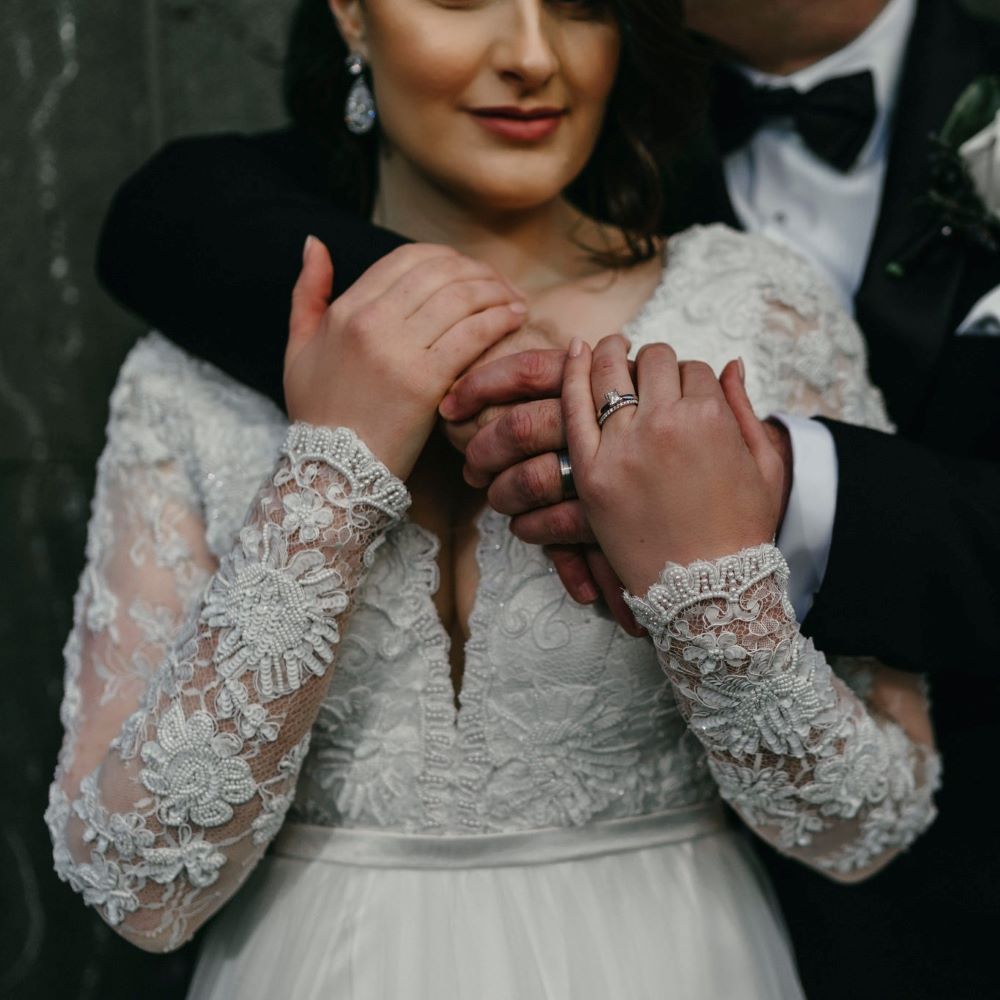


Wedding dress fabric is one of the most important decisions a bride makes — the right material determines the silhouette, movement, comfort, and overall mood of the gown. The most commonly used bridal fabrics are duchess satin, mikado, chiffon, silk georgette, crepe, organza, tulle, and lace. Each behaves differently: satin and mikado are structured and hold their shape, making them ideal for A-line and ball gown silhouettes. Chiffon and silk georgette drape softly and flow with movement, suiting boho, beach, and romantic styles. Crepe offers a smooth, modern drape with minimal sheen. Lace — including Chantilly, French, guipure, and 3D floral varieties — adds texture and romance to any silhouette. At d’Italia’s Malvern studio, brides choose from an in-house store of Italian and European bridal fabrics. This guide covers all 15 fabric types with pictures, pros and cons, and expert advice.Selecting the perfect fabric for your bridal gown can feel overwhelming, given the multitude of options available. Every gown is unique, and when you choose to have a custom-made dress, the right fabric is essential to ensure it drapes, falls, and behaves exactly as you envision.
The style, cut, texture, drape, venue, dress code, and season all play a pivotal role in determining the ideal wedding dress fabric. Some fabrics cling, others flare; some float gracefully as you move, while others maintain structured silhouettes. Silk remains one of the most coveted materials for bridal gowns, celebrated for its resilience, elasticity, softness, and lightweight nature. Unlike synthetic fabrics, silk won’t stick, cause discomfort, or stretch over time.
Not all gown styles suit every fabric, which is why understanding your options is key. This guide explores 15 popular bridal gown fabric types to help you make an informed choice for your dream dress.
Why Fabric Choice Matters in Wedding Dresses?
The right fabric can dramatically influence your gown’s overall effect.
Consider:
- Draping & Fit – Some fabrics, like chiffon or georgette, drape softly, creating romantic, flowy silhouettes. Stiffer fabrics, such as Mikado or duchess satin, maintain structure and volume.
- Comfort & Weight – Lightweight fabrics suit warm-weather or outdoor weddings, while heavier materials provide support and elegance for formal, indoor settings.
- Overall Bridal Style – Fabrics contribute to classic, modern, or romantic aesthetics.
Our wedding dress materials guide will help you navigate these choices, ensuring your gown complements both your style and your wedding day vision.
15 Popular Wedding Dress Fabrics
Choosing the right fabric is one of the most important decisions when designing your wedding gown. Each material has unique qualities that affect how your dress drapes, moves, and feels throughout the day.
From luxurious silks to structured satins and delicate tulles, understanding the characteristics of each fabric will help you select the perfect match for your style, silhouette, and wedding setting.
Below, we’ve outlined 15 popular bridal fabrics to inspire your dream gown.
1. Stretch Crepe
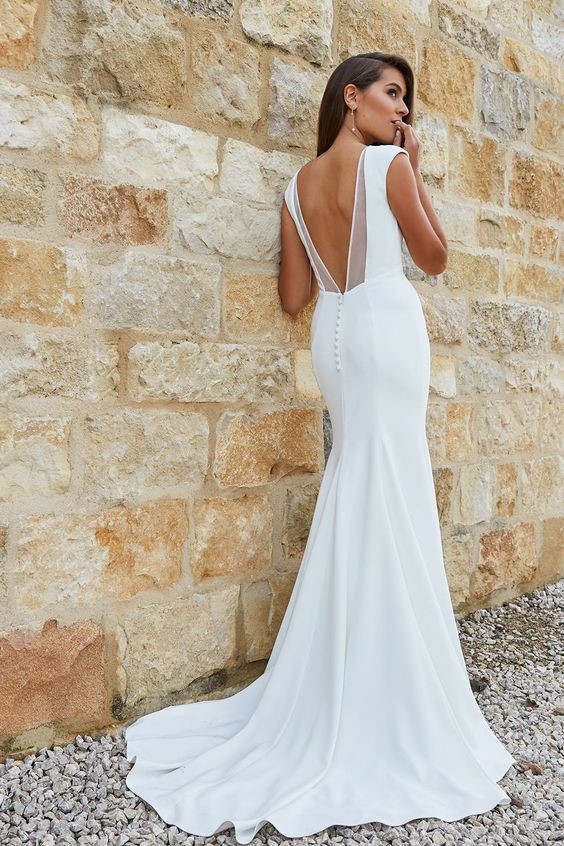
Designer: Jenny Yoo
A favourite in recent years, stretch crepe combines elegance and flexibility. With a subtle matte finish and slight texture, this fabric suits fitted silhouettes such as sheath or fit-and-flare gowns. Typically blended with elastane, stretch crepe moulds to your body beautifully while providing coverage and support. Its drape remains smooth, creating a modern, minimalist look.
2. Silk Mikado
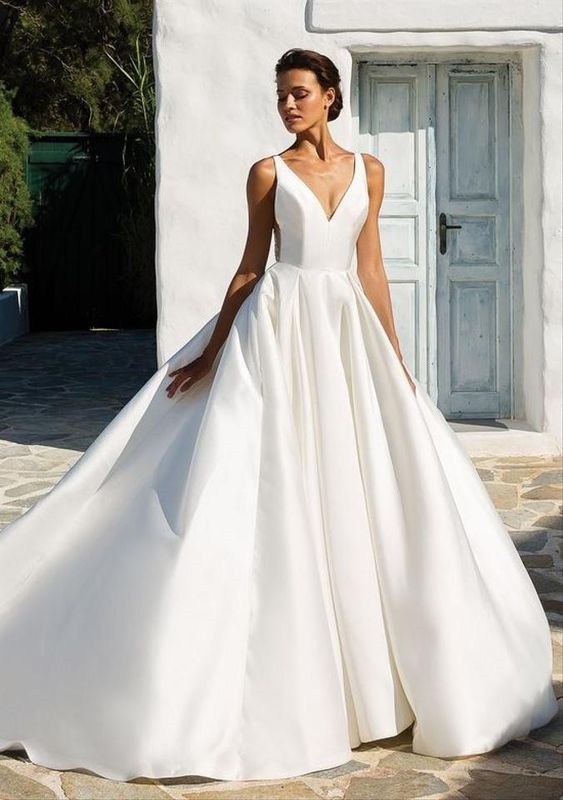
Designer: Justin Alexander
Silk Mikado is a structured fabric with a subtle twill texture and gentle sheen. Ideal for ball gowns or fit-and-flare styles, it maintains shape beautifully while offering versatility across seasons and formalities. Stiff fabrics can crease easily, so a silk blend is ideal for lasting elegance. Perfect for contemporary, statement gowns that rely on structure rather than embellishment.
3. Stretch Silk Satin
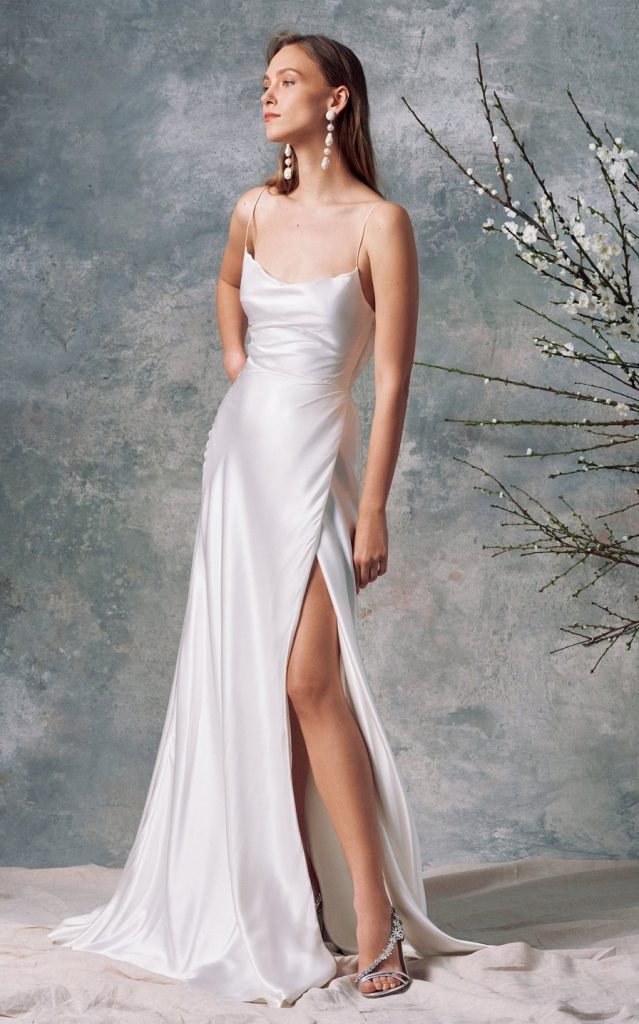
Designer: Markarian
Stretch silk satin is perfect for brides seeking fluidity with a touch of stretch. Lightweight and breathable, it is ideal for beach or garden weddings. This fabric enhances fitted silhouettes like slip dresses, draped sheaths, or romantic A-lines, moulding gracefully to the body for a flawless fit.
4. Grace Satin
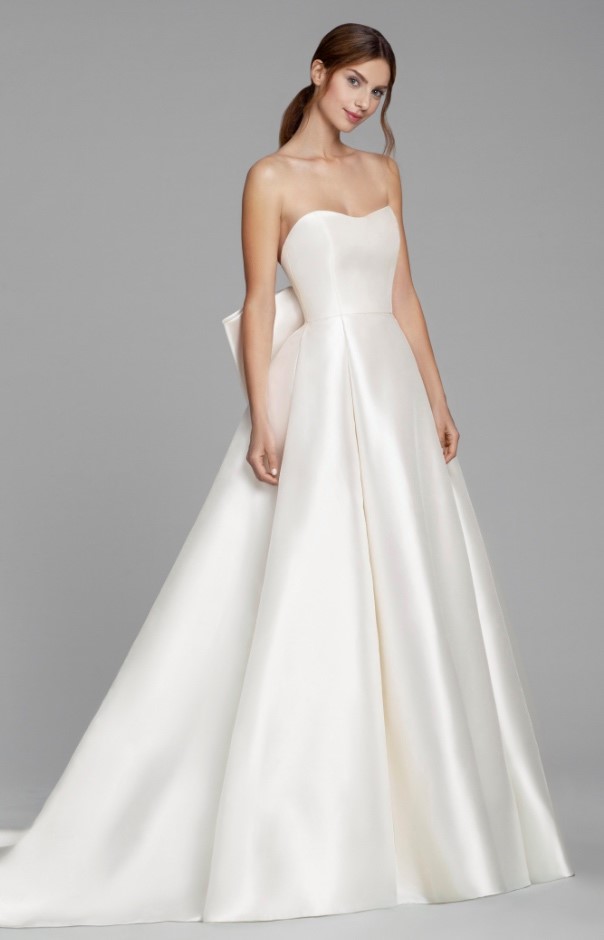
Designer: Lazaro via MODwedding
Grace satin features a luxurious glossy finish and thick, heavy composition, perfect for structured or voluminous gowns. Its substantial weight provides support and smooths areas of concern, while its shine adds elegance without additional embellishments. Grace satin can also be used for statement features such as bows, sashes, or overskirts.
5. Hail Spot Tulle
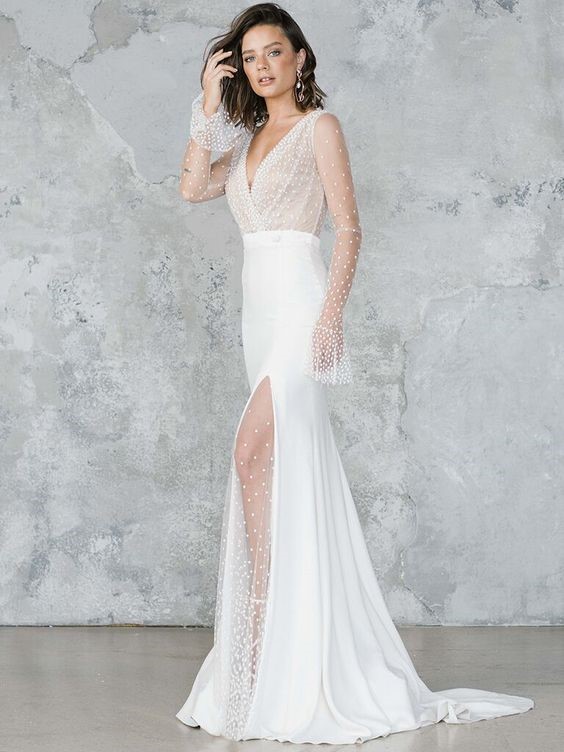
Designer: Rime Arodaky
A hail spot tulle adds subtle vintage charm with its scattered polka dot pattern. This sheer, textured fabric is commonly used for bodices, sleeves, or romantic, flowy skirts. Variations range from embroidered to flocked velvet polka dots, offering modern and elegant design possibilities.
6. Silk Chiffon
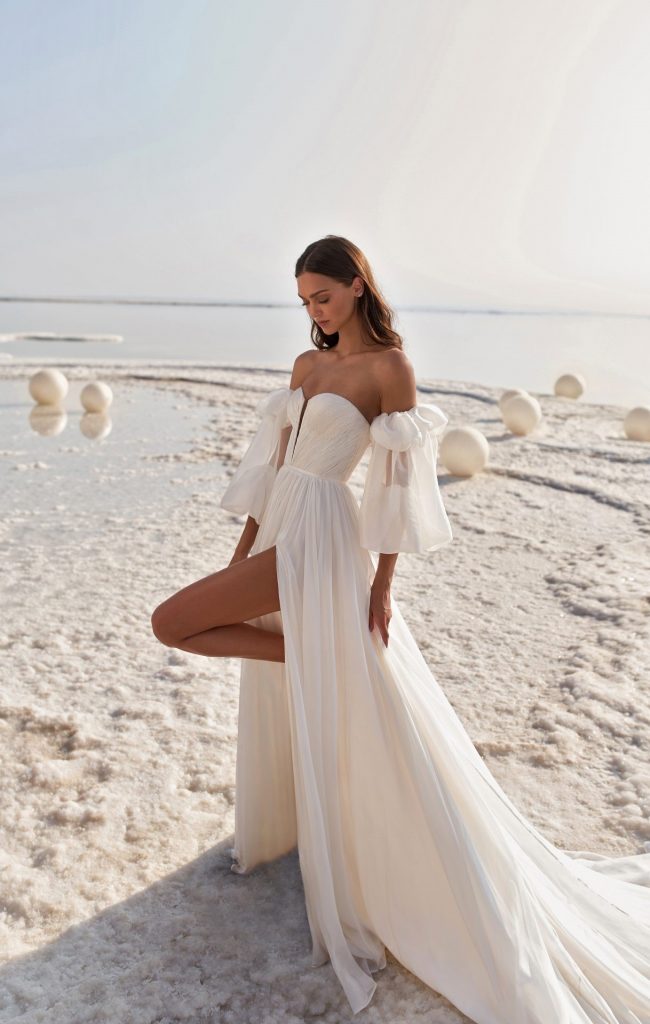
Designer: Lee Petra Grebenau
Silk chiffon is delicate, lightweight, and sheer, draping beautifully for dreamy, romantic gowns. Ideal as an overlay or for capes, shawls, and bridal wings, it softens any gown’s appearance. Chiffon is especially suited for ethereal designs and garden or beach weddings.
7. Pure Silk Crepe
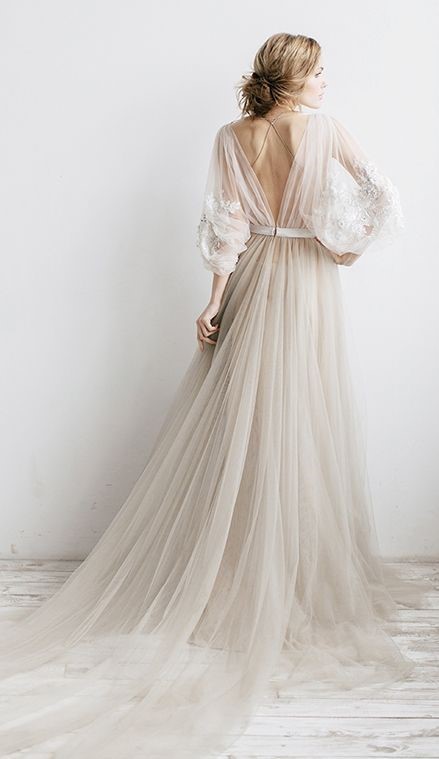
Designer: Rara Avis
Pure silk crepe features a crinkled, textured finish, adding subtle visual interest without heavy embellishments. Best used for flowy skirts or as a sheer overlay, it combines elegance with understated sophistication.
8. Silk Georgette
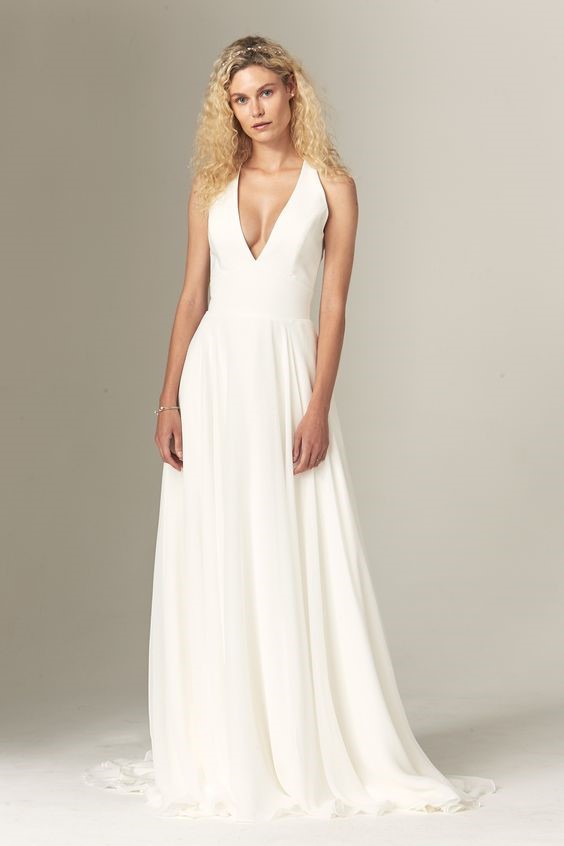
Designer: Savannah Miller
Silk georgette is lightweight with a slightly crinkled texture. It offers more coverage than chiffon, making it ideal for sleeves, overlays, or capes. This fabric enhances mermaid or trumpet gowns with soft ruching or delicate drapes.
9. Silk Faille
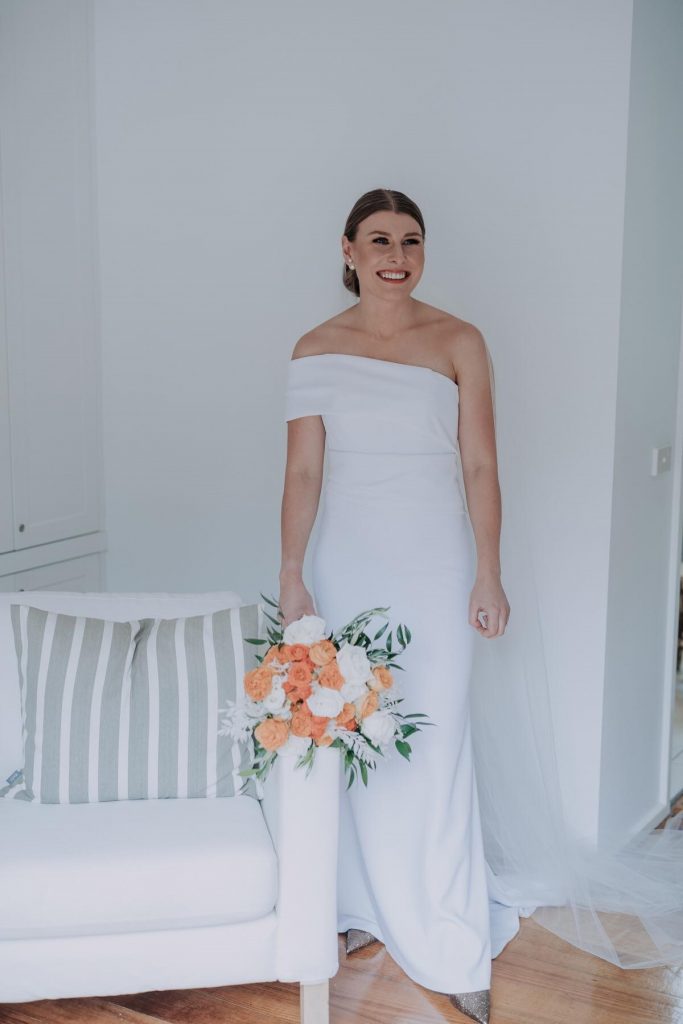
Designer: d’Italia // Photographer: @mattelliottphotography // Bride: @sophbrenno
Silk faille is closely woven, semi-structured, and slightly elastic, making it suitable for almost every gown style. It drapes elegantly, offers a subtle sheen, and is wrinkle-resistant – perfect for beach, garden, or traditional weddings.
10. Silk Satin Back Crepe
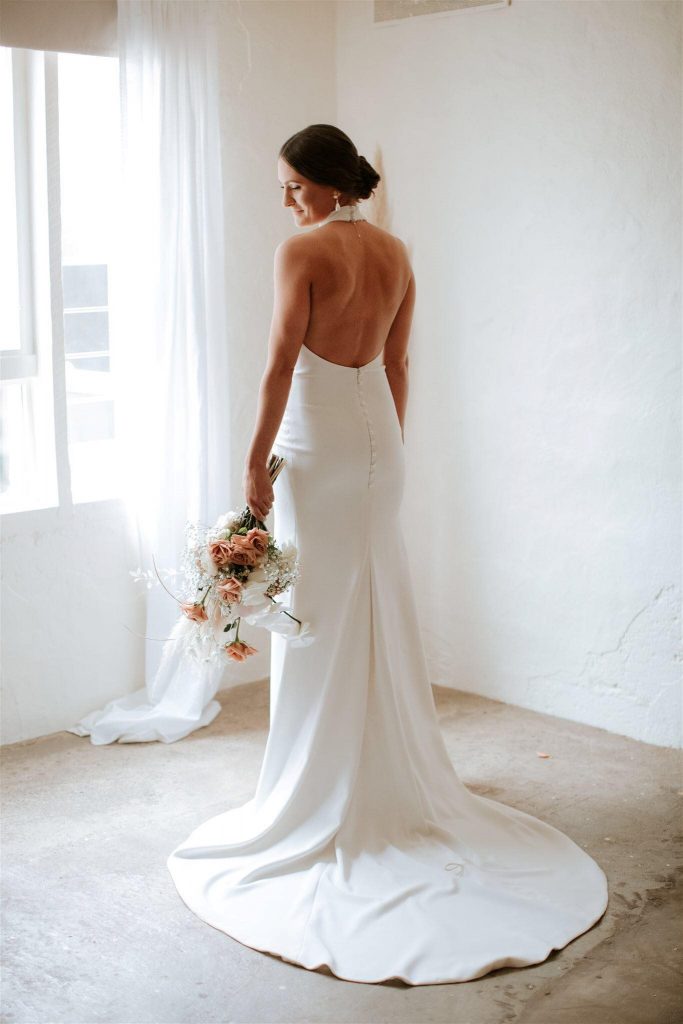
Designer: d’Italia // Photographer: Shot from the heart // Bride: Becky Falsone
Versatile and reversible, silk satin back crepe offers a glossy satin side for formal gowns and a matte crepe side for modern, minimalist looks. Suitable for both tailored and flowy designs, it is an excellent choice for brides undecided between classic or contemporary styles.
11. Silk Organza
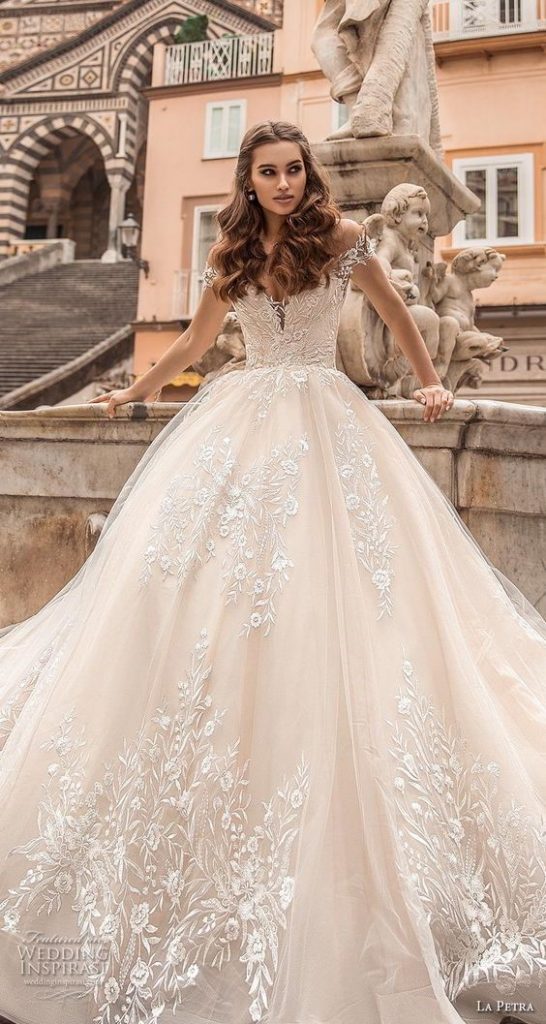
Designer: La Petra Bridal
Silk organza is crisp, structured, and sheer with a subtle sheen. Ideal for layered skirts or balloon-style sleeves, it adds volume and architectural elegance while maintaining refinement.
12. Silk Tulle
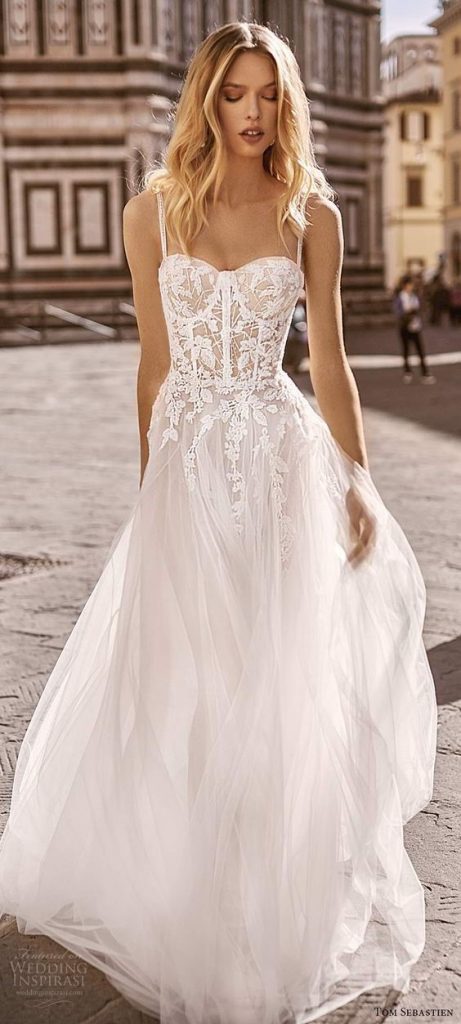
Designer: Tom Sebastian
Silk tulle is a soft, fine mesh used for skirts, veils, and dramatic capes or wings. Its airy nature suits fit-and-flare, A-line, or sheath gowns, offering movement and elegance without excess bulk. Stiffer tulles are used for petticoats to add volume.
13. Silk Duchess Satin
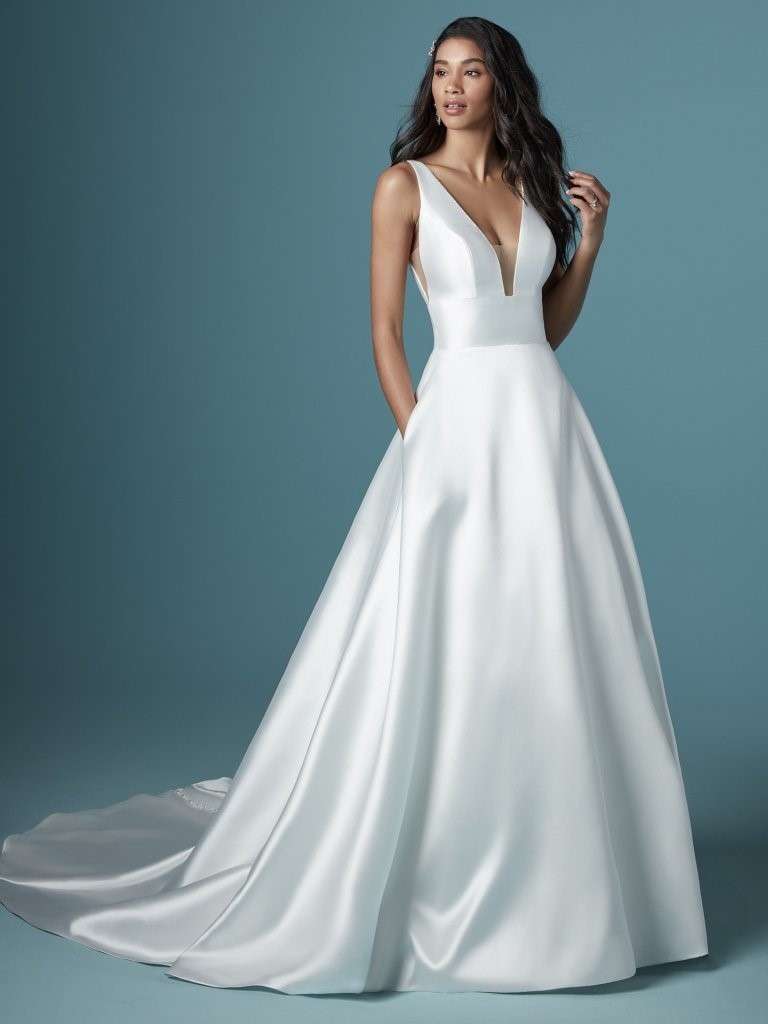
Designer: Maggie Sottero
Duchess satin is medium-bodied, slightly stiffer than queen satin, and excellent for structured corsetry or full silhouettes. Its dual finish – glossy on one side, subtle matte on the other – enhances versatility for both formal and contemporary gowns.
14. Silk Zibeline
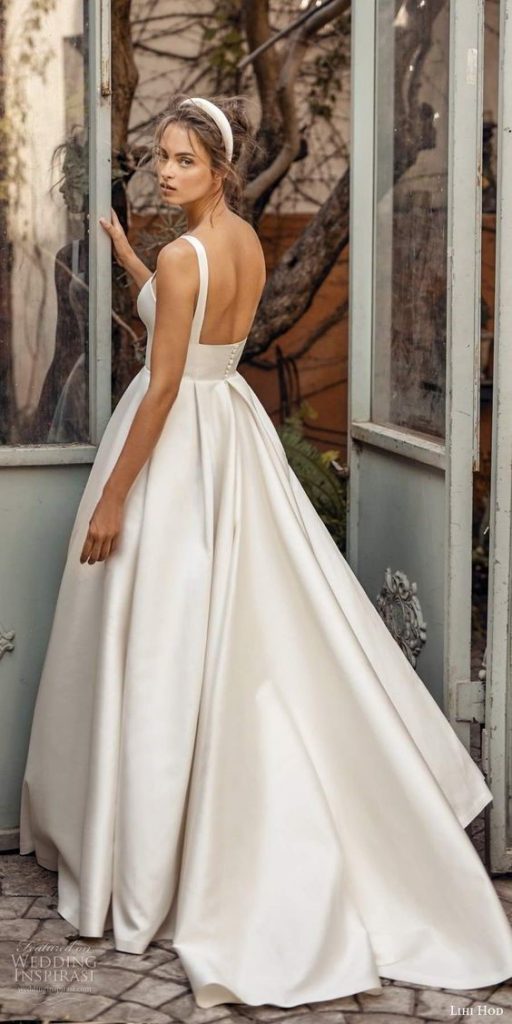
Designer: Lili Hod
Silk zibeline features a twill weave and satin-like finish. It holds shape exceptionally well, ideal for pleated skirts, A-lines, or ball gowns, offering both structure and subtle shine.
15. Neo-Preen Scuba
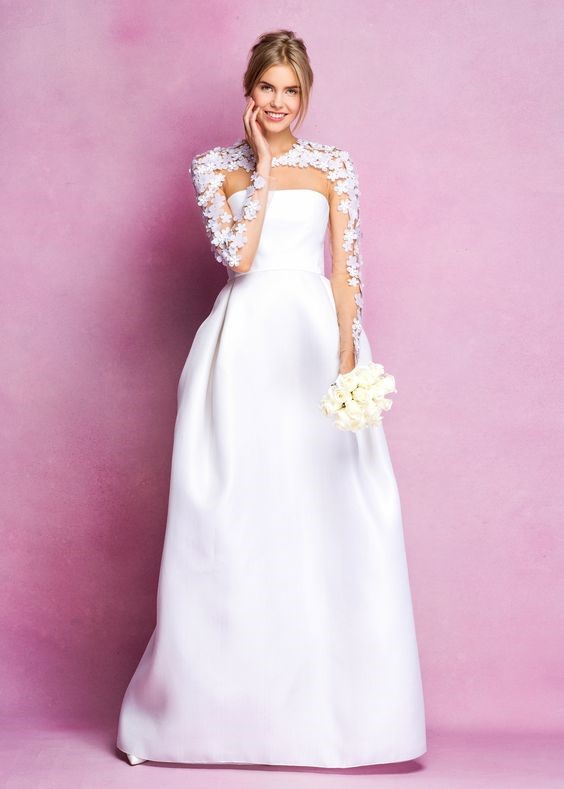
Designer: Angel Sanchez
Neo-preen scuba is a modern bridal fabric with stretch, weight, and support. Suitable for fitted silhouettes, it smooths areas of concern and maintains comfort and movement. Best paired with a crinoline petticoat for ball-gown designs.
How to Choose the Best Fabric for Your Wedding Dress?
Selecting the right fabric for your bridal gown involves more than just aesthetics. Factors such as season, venue, dress style, and personal comfort all play a role in determining which material will best complement your design.
Understanding the properties of each fabric can help you make an informed decision, ensuring your gown looks stunning while feeling comfortable throughout your special day.
- Seasonal Considerations – Lightweight fabrics like chiffon, georgette, or stretch silk satin suit warmer weather, while heavier fabrics like duchess satin or zibeline are ideal for cooler seasons.
- Dress Style Considerations – Structured fabrics for ball gowns, flowy materials for A-lines or sheath dresses.
- Comfort & Movement – Consider sitting, dancing, and weather conditions.
- Budget Considerations – Silk options versus synthetic alternatives.
Care and Maintenance Tips for Bridal Fabrics
Proper care and maintenance are essential to preserve the beauty and longevity of your bridal gown. Different fabrics require specific handling, from cleaning methods to storage, to ensure your dress remains flawless from your fittings right through to your wedding day and beyond.
Paying attention to these details will help your gown retain its shape, texture, and elegance for years to come.
- Cleaning Instructions – Follow fabric-specific guidelines; silk and delicate fabrics often require professional cleaning.
- Storage Before the Wedding – Keep gowns in breathable garment bags, away from direct sunlight.
- Post-Wedding Preservation – Dry-clean and store properly to maintain longevity.
Get Your Bespoke Wedding Dress Now!
Choosing the right fabric ensures your gown complements your body, style, and wedding vision. Explore swatches, consider your venue, season, and silhouette, and select a fabric that marries comfort with elegance.
Ready to create your dream gown? Contact us today for a free in-store design consultation and personalised styling advice from our expert designers.